
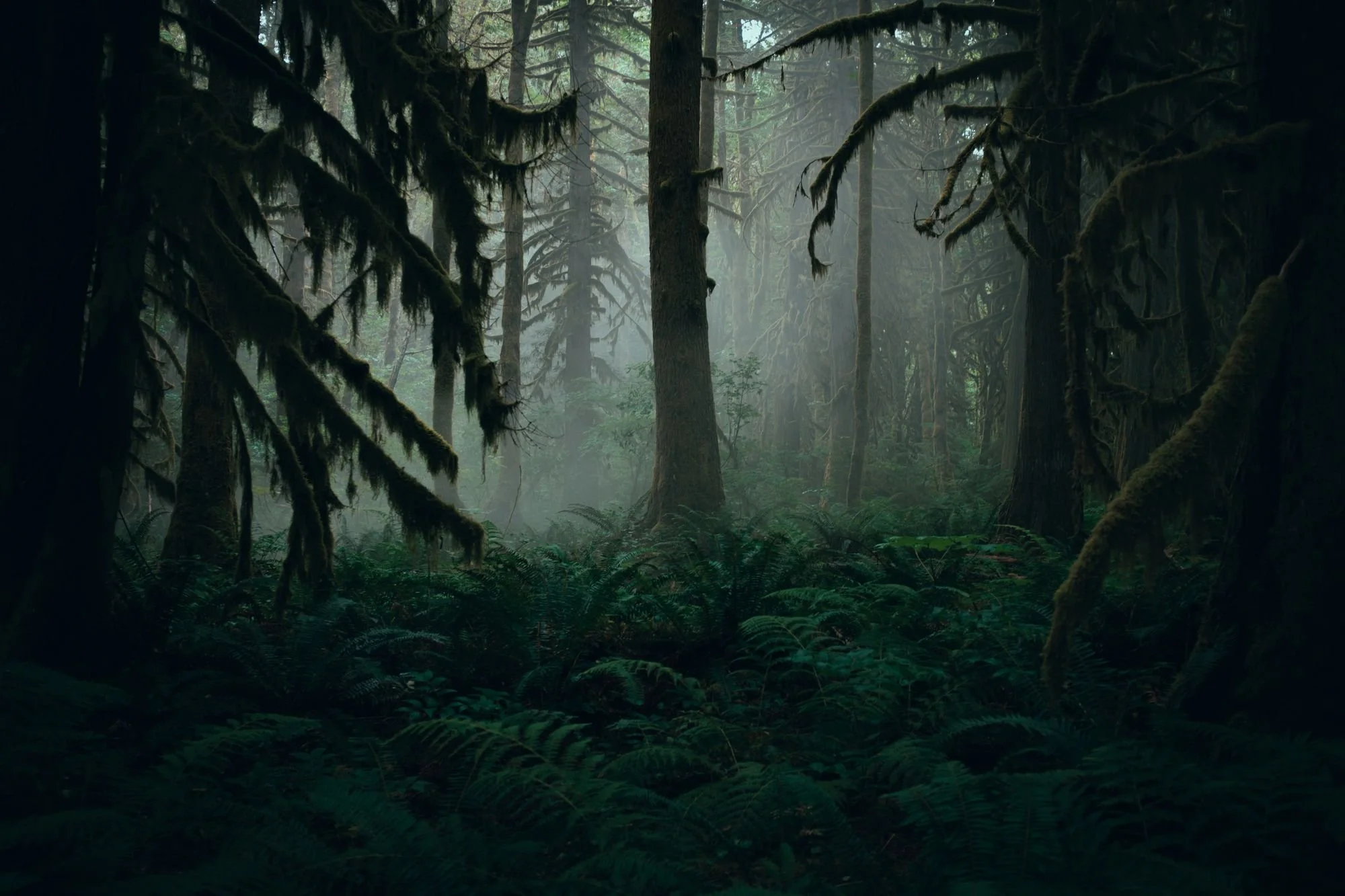
The Forest, for the Record
The trouble with ecological loss is that it tends to remove its own witnesses. By the time a place sounds quiet enough to alarm us, quiet may already feel normal.
The trouble with ecological loss is that it tends to remove its own witnesses. By the time a place sounds quiet enough to alarm us, quiet may already feel normal.
A child grows up beside a river with fewer fish than it held a generation earlier and calls it normal. A young biologist begins work in a forest that has already lost half its species and calls it a baseline. The change may be measurable. The memory of what came before is not always so cooperative.
The marine biologist Daniel Pauly gave this problem a name in 1995: shifting baseline syndrome. Each generation inherits a slightly diminished natural world, then mistakes the condition in which it found that world for the condition in which it began. The baseline moves. Our expectations politely move with it.
A new study in Global Change Biology is attempting to pin one part of that baseline down.
The Soundscape Baselines Project, led by forest ecologist Zuzana Buřivalová and an international network of local scientists, conservation practitioners, community members, and Indigenous partners, has begun building a permanent acoustic record of some of the world’s remaining intact forests.
The first phase spans six places: Andulau Forest Reserve in Brunei; Tiputini Research Station in Ecuador; Ibola Dja Bana Ba Massaha in Gabon; Bavarian Forest National Park in Germany; Manu Biological Station in Peru; and the Baraboo Hills in Wisconsin.
At each location, six recorders were placed at separate sites and left to listen continuously. 24 hours a day, for at least 365 days. Camera traps watched nearby. Local teams returned each month to change batteries, collect memory cards, and keep the long act of attention going.
The project defines an intact forest as one with minimal human influence, including no commercial timber extraction for at least forty years. That does not make these places untouched. Few places are. It makes them reference points: living examples of what a relatively complete forest sounds like across dawns, storms, migrations, dry spells, insect seasons, and all the less cinematic hours between them.
This matters because trees are easier to count than absences.
Satellites can show whether a canopy remains. Cameras can document animals that pass in front of them. A microphone captures a different layer of the place: birds, frogs, insects, mammals, rain, wind, branchfall, engines, aircraft…every audible participant, whether or not a researcher already knows its name.
That last part may be the most important. The scientists do not need to identify every sound today in order to preserve it. Bioacoustic tools are still developing, and many species remain difficult to recognize by call alone. The recordings can be revisited as the science improves. A voice that is anonymous now may become legible years from now.
It is a time capsule designed to become more informative with age.
The project’s early analyses found that the intact forests carried distinctive acoustic signatures, with recognizable daily patterns shared across sites in the same forest. They also found a useful warning for anyone tempted to reduce a living system to one tidy score: time of day matters.
Broad averages can make two forests appear similar while concealing meaningful differences in how their sound rises, falls, and reorganizes over twenty-four hours.
Even a forest can disappear inside a spreadsheet.
Conservation has spent decades making nature legible to systems that prefer numbers: hectares protected, carbon stored, species counted, credits issued. These measures are necessary. They are also incomplete.
A forest can remain green from above while becoming simpler below the canopy. Without a reliable reference, a restoration project may be compared with another diminished place and still look like success.
An acoustic baseline gives the comparison somewhere honest to begin.
For WILDSOUND, the idea feels familiar. A recording from a named place, made at a particular moment and preserved with its context, is more than an appealing sound. It is a document. Remove the source and it becomes ambience. Preserve the source and it can carry memory.
This is why “forest” is never quite enough. The sound of Manu belongs to Manu. The sound of Tiputini belongs to Tiputini. Each place has its own arrangements, repetitions, interruptions, and silences. To flatten them into a category is to discard some of the information that makes them worth hearing in the first place.
A recording cannot protect a forest by itself. Neither can a photograph, a map, or a scientific paper. But it can protect something conservation needs before meaningful action is possible: an honest memory of what was there.
Sometimes the first thing a place loses is not a species. It is our ability to notice that the species has gone.
The forest is being put on the record. We should listen while the witnesses are still speaking.
Sources
Buřivalová, Z. et al. (2026). “Bioacoustic Baselines for Intact Forests.”Global Change Biology, 32(5).
Soundscape Baselines Project, Sound Forest Lab, University of Wisconsin–Madison.
Pauly, D. (1995). “Anecdotes and the Shifting Baseline Syndrome of Fisheries.”Trends in Ecology & Evolution, 10(10), 430.