
What Nature Sound Apps get Wrong
Nature sound apps have solved half the problem. They've made the therapeutic benefits of wild places accessible to people who live far from them. That's not nothing. The other half (the part that asks where those places are, what's happening to them, and whether our listening leaves anything behind) remains almost entirely unaddressed.
They figured out that nature sounds work. They just didn't ask where nature sounds come from.
There's a scene that plays out millions of times a day. Someone opens an app, taps "forest," and lets the sound run while they work, sleep, or try to come down from a difficult afternoon.
The science behind this is solid. Nature sounds reduce cortisol. They lower heart rate. They shift the brain from an inward, ruminative state toward an outward, attentive one. A 2017 University of Sussex study found that participants listening to natural soundscapes showed measurably different neural activity than those exposed to artificial sound. Patterns associated with rest, focus, and reduced anxiety.
The apps are delivering something real. The problem isn't whether nature sounds work. The problem is what they're not telling you about the nature sounds they're selling.
Open almost any meditation or sleep app and look at how the nature sounds are labeled. You'll find: Forest. Rain. River. Ocean. Waterfall. Jungle. Categories, not places. They tell you the type of sound the way a grocery store label tells you something is "fruit." They carry no information about origin, ecology, or the actual existence of a specific living system that was recorded.
This isn't an oversight. It's a design choice. And it has consequences.
When a sound is labeled "forest," no one asks: which forest? Where? Is it threatened? Does it have a name? Is it still there? The sound becomes a commodity. Extracted from its source, processed for consumer use, offered back at a monthly subscription rate with no attribution, no context, and no mechanism for contributing to the thing being consumed.
This is, in structure, the same logic that has driven the degradation of natural soundscapes in the physical world. We take what's useful. We don't pay royalties to the source.
The deeper issue is what this model does to connection.
The therapeutic benefits of nature sounds are real, but they exist on a spectrum. Passive listening to a generic "rain" track is one end. Knowing you're hearing the Oirase Stream in Japan's Aomori Prefecture, a waterway recognized by the Ministry of the Environment as one of the 100 Soundscapes of Japan, whose beech forests are a UNESCO World Heritage Site, whose banks are alive with the Japanese serow and 87 bird species, is something else. The sound hasn't changed. The relationship to it has.
Researchers studying nature connection consistently find that specificity matters. The more we understand what we're encountering in the natural world, the more likely we are to develop genuine attachment to it. Names, context, and ecological knowledge don't make the listening experience more clinical. They make it more real.
Generic labels quietly prevent that. They keep the listener at the surface.
There's also the question of what comes next. Even if a nature sound app could deliver profound connection, even if "forest" were somehow enough, what would a listener do with that feeling? Where would the response go?
Most apps offer no answer. There's no pathway from the emotion to the action. No way to support the ecosystem behind the sound, to learn about the conservation pressures it faces, to direct even a small portion of the subscription fee back toward its preservation. The loop stays open.
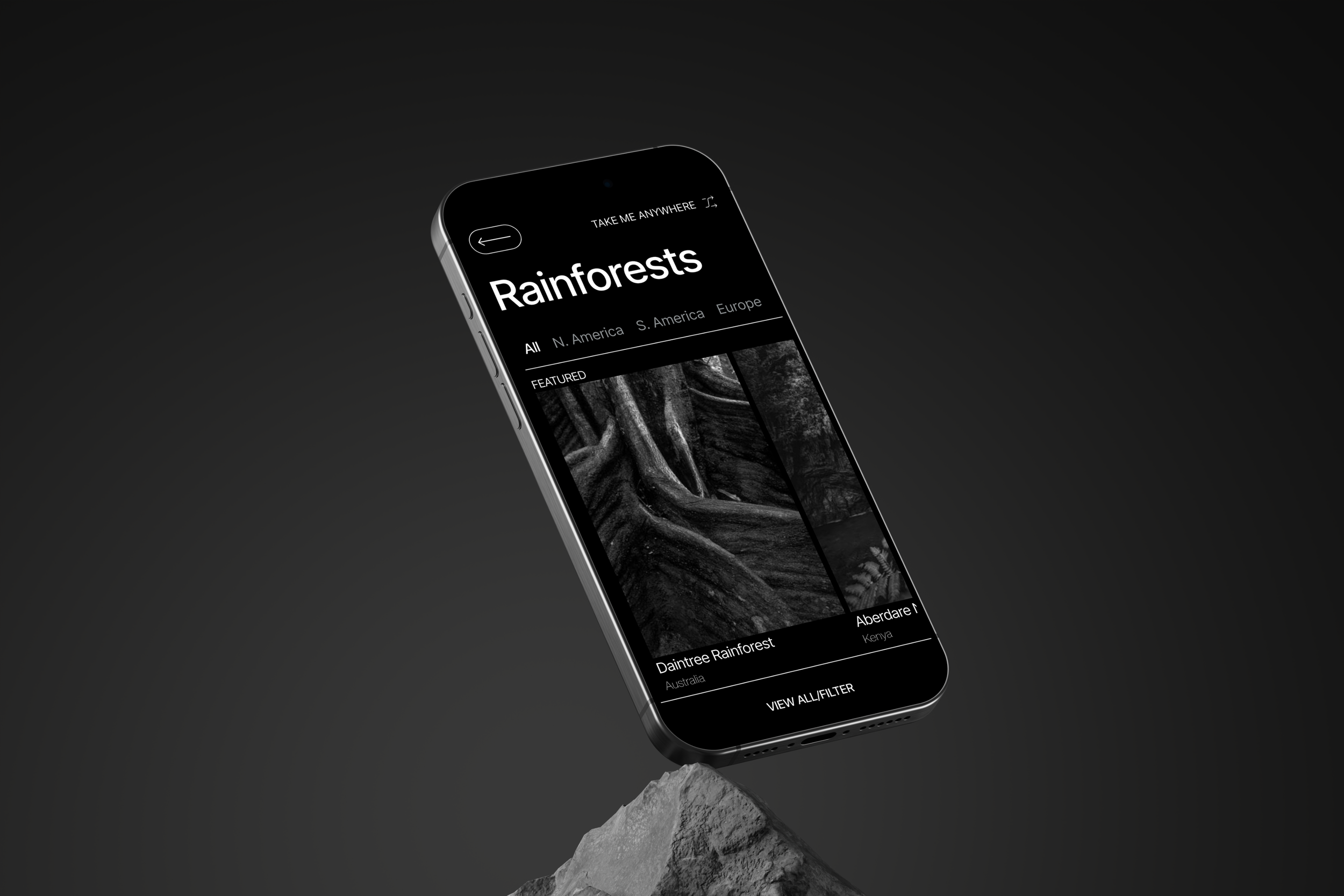
WILDSOUND was built to close it. Every soundscape in the library is tied to a named location, real coordinates, ecological context, and conservation status. Every subscription supports named NGO partners doing active work in these ecosystems. The Odzala-Kokoua National Park in the Republic of Congo, where African Parks manages 13,500 square kilometers of ancient rainforest. The Simien Mountains in Ethiopia, home to the endangered walia ibex and the endemic Ethiopian wolf. Madidi National Park in Bolivia, named by the Wildlife Conservation Society as the most biologically diverse national park on Earth.
These are not categories. They are places. And the distinction, it turns out, changes everything.
Nature sound apps have solved half the problem. They've made the therapeutic benefits of wild places accessible to people who live far from them. That's not nothing.
The other half (the part that asks where those places are, what's happening to them, and whether our listening leaves anything behind) remains almost entirely unaddressed.
That's the gap worth closing.
What Is an Ecosound App?
An ecosound app begins with a different premise. That knowing where a sound comes from matters.
You've probably listened to rain that wasn't really rain. Or rather, rain that could have been anywhere, recorded by anyone, stripped of every quality that made it a specific thing happening in a specific place at a specific moment in time.
Most nature sound apps work this way. They traffic in categories. Rain. Forest. River. Ocean. Useful as descriptors. Not sources.
An ecosound app begins with a different premise. That knowing where a sound comes from matters. Not as a trivia detail. Not as metadata. But as the thing that transforms passive listening into something closer to genuine contact with the living world.
The distinction sounds subtle. It isn't.
When you know that what you're hearing is the Opalescent River in New York's High Peaks Wilderness, that it originates from the west face of Little Marcy Mountain, flows through pristine alpine zones before joining the Hudson, and carries the designation of a New York State Wild River, the sound changes. Not acoustically. Contextually. The river becomes a river. An individual thing with a particular existence and a particular vulnerability.
That's what naming does. It closes the distance between listener and source that generic categories quietly enforce.
This is what ecosound means. Not a new genre of audio content. A theory of listening. One that insists the source matters as much as the sound. That the way most of us consume nature sounds on meditation and sleep apps is a mild version of the same extractive logic happening to these places in the real world. We take the sound. We leave nothing behind. We don't even know what we took it from.
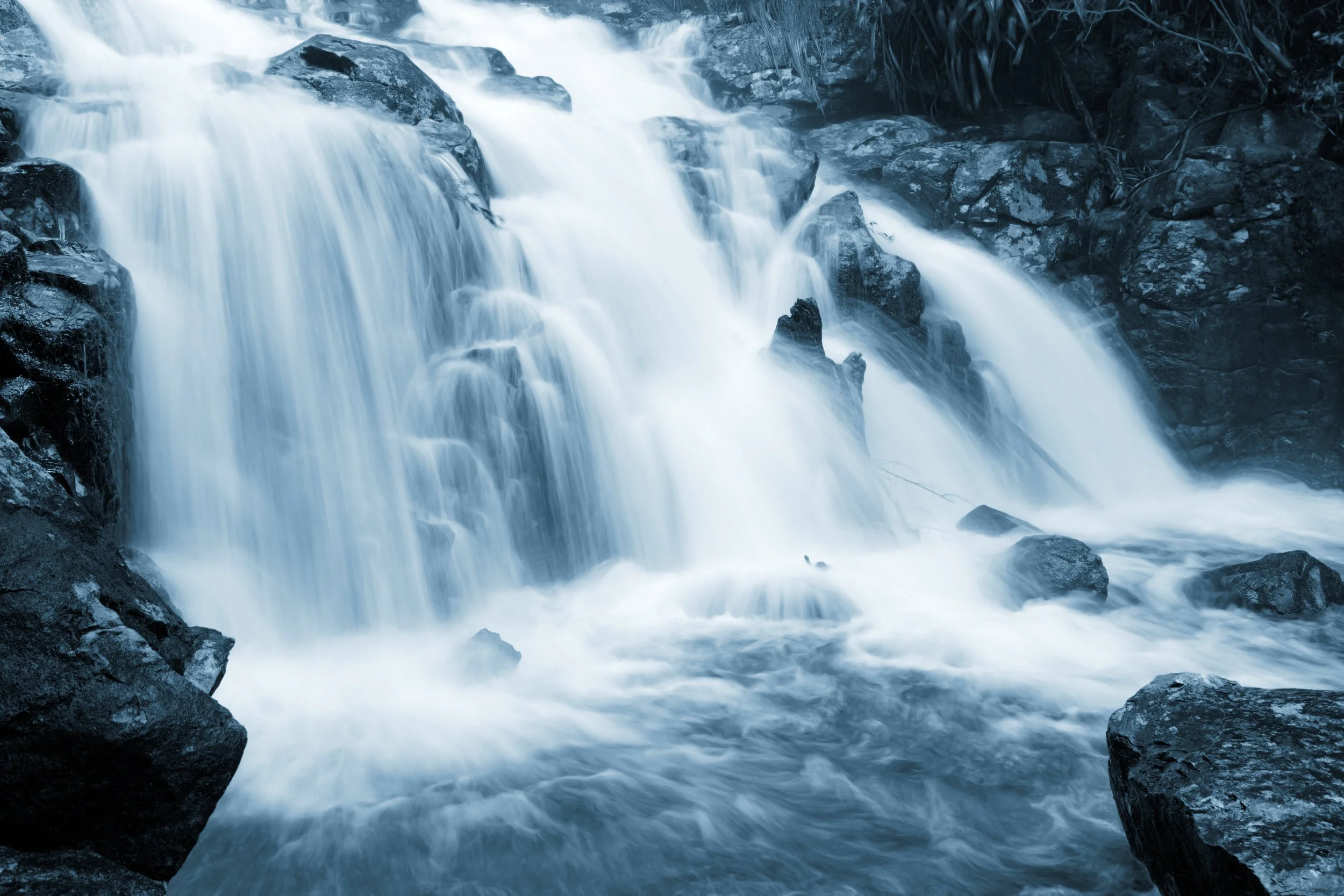
WILDSOUND was built around the opposite idea. Every soundscape in the library is field-recorded and geolocated. Not "rainforest," but the Bogachiel Rain Forest in Washington's Olympic Peninsula. Not "waterfall," but Helmcken Falls in Wells Gray Provincial Park, British Columbia: 141 meters of freefall over ancient volcanic rock, fourth-highest in Canada. Not "birdsong," but the Bwindi Impenetrable Forest in Uganda, where mountain gorillas move through afromontane undergrowth that has existed for tens of thousands of years.
The specificity is the point.
And then there's what comes next. An ecosound app that only names places stops halfway. WILDSOUND ties each subscription to active conservation support, through WWF, Conservation International, and The Nature Conservancy, so that listening becomes a closed loop. You hear the river. You know its name. You help protect what's left of it.
This is the working premise behind ecosound. That attention and care are connected. That the wild places we listen to have earned their royalties. That an app can be the mechanism by which we finally start paying them.
The bill has been outstanding for a long time.