
What Is an Ecosound App?
An ecosound app begins with a different premise. That knowing where a sound comes from matters.
You've probably listened to rain that wasn't really rain. Or rather, rain that could have been anywhere, recorded by anyone, stripped of every quality that made it a specific thing happening in a specific place at a specific moment in time.
Most nature sound apps work this way. They traffic in categories. Rain. Forest. River. Ocean. Useful as descriptors. Not sources.
An ecosound app begins with a different premise. That knowing where a sound comes from matters. Not as a trivia detail. Not as metadata. But as the thing that transforms passive listening into something closer to genuine contact with the living world.
The distinction sounds subtle. It isn't.
When you know that what you're hearing is the Opalescent River in New York's High Peaks Wilderness, that it originates from the west face of Little Marcy Mountain, flows through pristine alpine zones before joining the Hudson, and carries the designation of a New York State Wild River, the sound changes. Not acoustically. Contextually. The river becomes a river. An individual thing with a particular existence and a particular vulnerability.
That's what naming does. It closes the distance between listener and source that generic categories quietly enforce.
This is what ecosound means. Not a new genre of audio content. A theory of listening. One that insists the source matters as much as the sound. That the way most of us consume nature sounds on meditation and sleep apps is a mild version of the same extractive logic happening to these places in the real world. We take the sound. We leave nothing behind. We don't even know what we took it from.
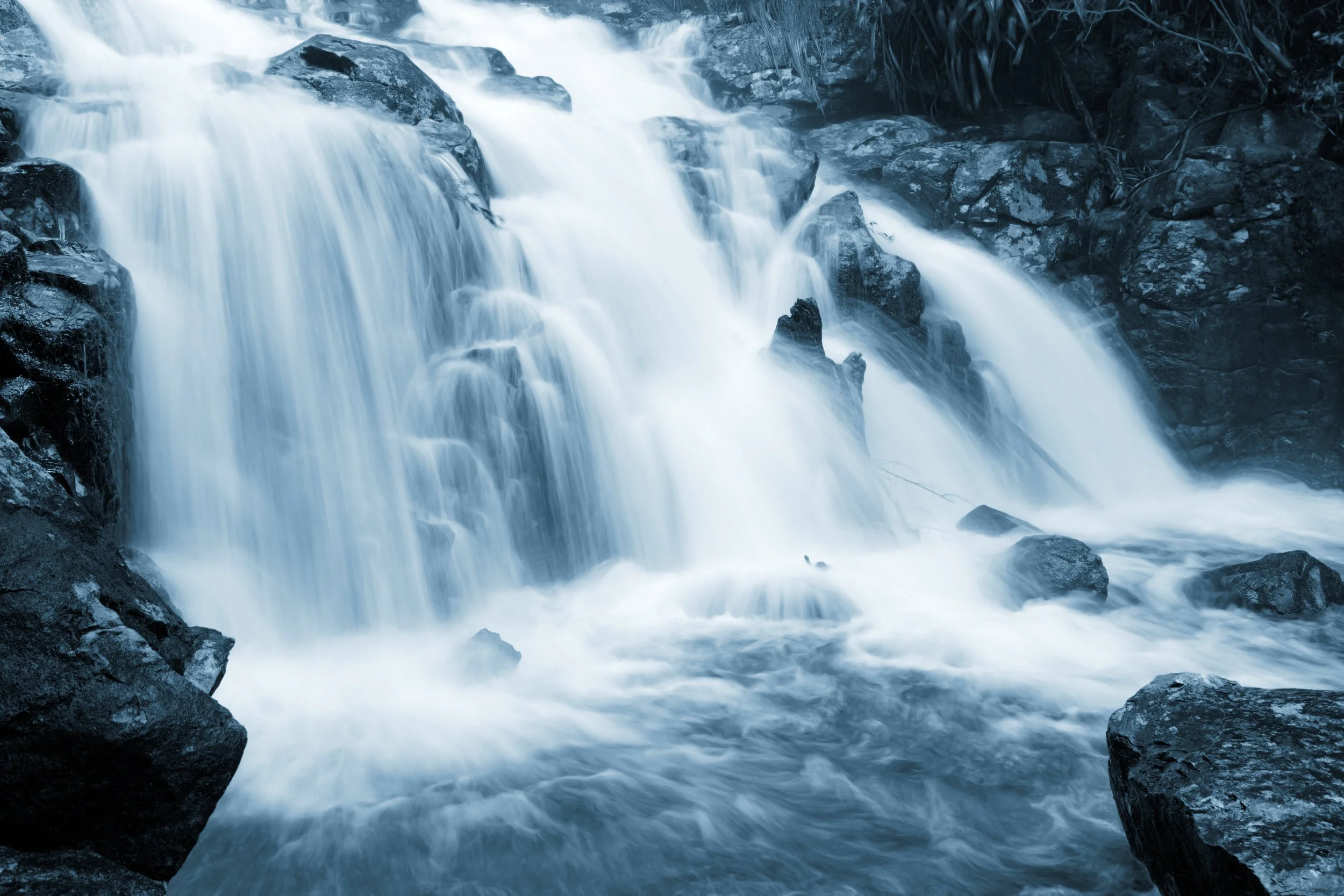
WILDSOUND was built around the opposite idea. Every soundscape in the library is field-recorded and geolocated. Not "rainforest," but the Bogachiel Rain Forest in Washington's Olympic Peninsula. Not "waterfall," but Helmcken Falls in Wells Gray Provincial Park, British Columbia: 141 meters of freefall over ancient volcanic rock, fourth-highest in Canada. Not "birdsong," but the Bwindi Impenetrable Forest in Uganda, where mountain gorillas move through afromontane undergrowth that has existed for tens of thousands of years.
The specificity is the point.
And then there's what comes next. An ecosound app that only names places stops halfway. WILDSOUND ties each subscription to active conservation support, through WWF, Conservation International, and The Nature Conservancy, so that listening becomes a closed loop. You hear the river. You know its name. You help protect what's left of it.
This is the working premise behind ecosound. That attention and care are connected. That the wild places we listen to have earned their royalties. That an app can be the mechanism by which we finally start paying them.
The bill has been outstanding for a long time.